
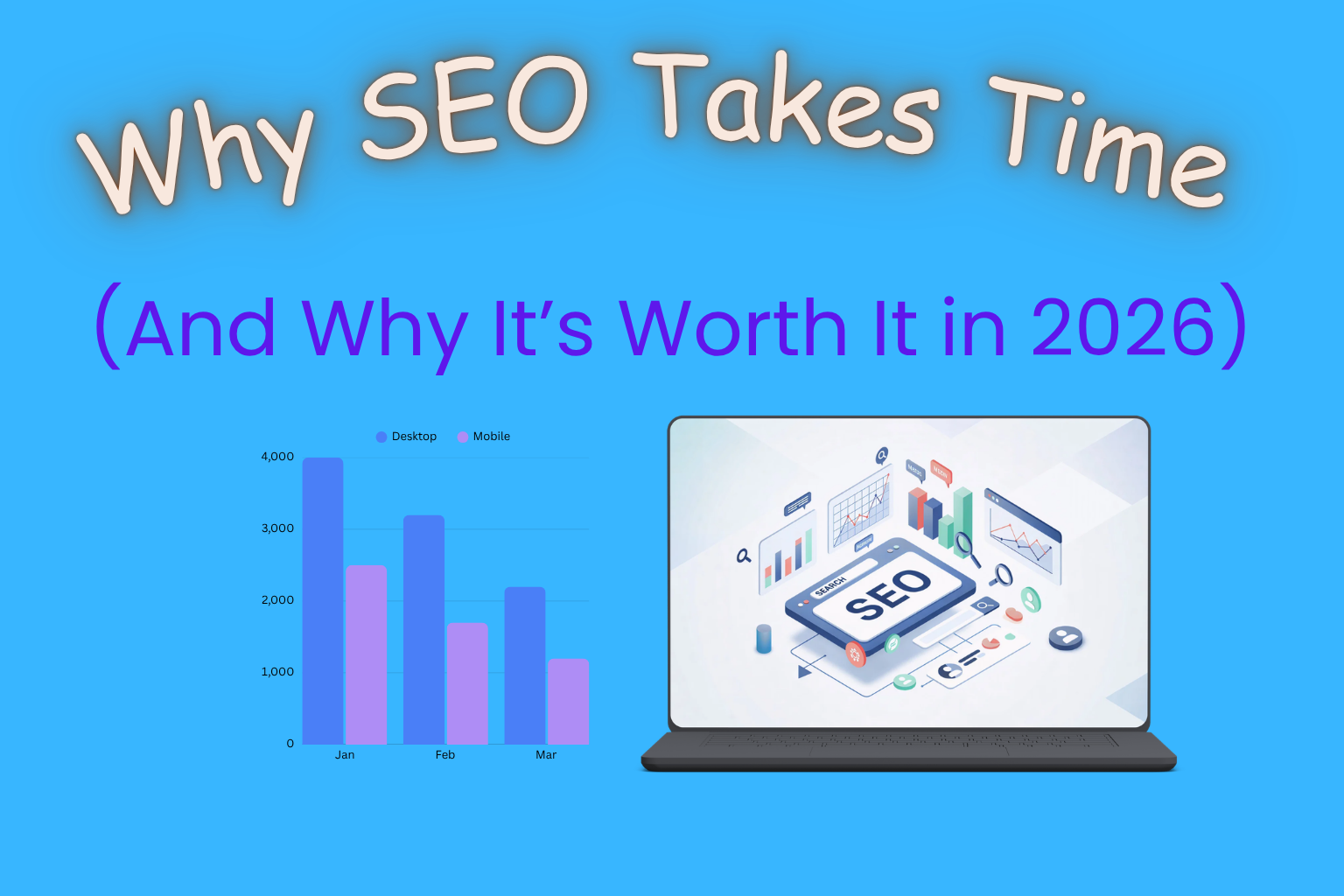
Let me start with something most marketing blogs won’t say out loud: if someone promises you page-one rankings in 30 days, they’re either lying to you or about to get your site penalized.
SEO is slow. It is neither broken, nor old fashioned. Now we are living is a world where we run an ad campaign in the afternoon time and can check if the traffic is coming or not by the evening, this kind of slowness can be offensive. But the main thing is that this slowness is worth.
The Trust-Building Problem
Whenever we publish a new content or post something new on blog, Google has no idea about us like who we are. We are just entering a room which is full of people who are having the same conversation for years, and we are now asking them to take our word for it.
Here, Search engines are behaving like trust machines. They are trying to judge and figure out that which of the content is telling the truth, helping people consistently and also stick around consistently. That kind of trust cannot be achieved in a week. It’s earned over dozens of pieces of content, hundreds of backlinks, and months of user behaviour that says, yes, this site delivers what it promises.
This is why newer sites — even excellent ones — tend to sit in what SEOs call the “Google sandbox.” It’s not a conspiracy. It’s just a waiting period while the algorithm figures out if you’re the real deal.
What’s Actually Happening During Those First Six Months
Here’s a rough map of what a typical SEO timeline looks like, and what’s going on under the surface:
Months 1–2: Laying the foundation You’re publishing content, fixing technical issues, building internal links. Google is crawling but not yet committing. Your rankings might jump around wildly — that’s normal. The algorithm is essentially A/B testing your content against established competitors.
Months 3–4: The first signals If your content is genuinely helpful and well-structured, you’ll start seeing some movement. Long-tail keywords with low competition might break into the top 20. You probably won’t be celebrating yet, but the data starts to look interesting.
Months 5–6: Compounding begins This is where the work starts to pay off quietly in the background. Pages that ranked at position 18 climb to position 9. Content you published in month two gets a backlink from a blog you’d forgotten you’d reached out to. Organic clicks start showing up in Search Console in a way that makes you smile.
Month 6 onward: The flywheel effect Traffic builds on itself. Higher-ranked pages attract links, which boost other pages, which attract more traffic. A piece you wrote eight months ago suddenly ranks for a term you never even targeted. This is the compounding effect people talk about, and it’s real — it just requires patience to get there.
Why 2026 Makes This More Important, Not Less
A lot of people assumed AI would kill SEO. It hasn’t. What it’s done is flood the internet with mediocre, machine-generated content — which has made genuinely good, human-written content more valuable than ever.
Google’s ranking systems have become really better at distinguishing content written to help people from those who are writing content to rank only. In 2026, E-E-A-T (Experience, Expertise, Authoritativeness, Trustworthiness) isn’t just a buzzword — it’s a real differentiator. There’s also the Search Generative Experience to think about. AI Overviews now appear at the top of many search results, summarising answers before users even click. This has reduced clicks on some informational queries. But it’s increased the value of ranking in the sources those AI summaries cite — and that’s almost always authoritative, well-linked, trustworthy content.
The Math That Changes Everything
Here’s the comparison that tends to shift people’s thinking.
Paid search delivers traffic the moment you fund it and stops the moment you don’t. Over a year, you might spend ₹3–5 lakhs on ads and generate a decent return — but the second the budget runs dry, so does the traffic.
SEO is different. The content you publish today, the links you earn this quarter, the authority you build over the next year — all of that keeps working after you’ve stopped actively paying for it. A well-optimised blog post can drive traffic for three, four, five years without additional spend.
The cost per click from organic traffic trends toward zero over time. The cost per click from paid traffic never does.
This is why established businesses with strong SEO foundations weather algorithm updates, economic downturns, and competitive pressure better than businesses that rely entirely on paid channels. It’s not that paid is bad — it’s that organic is a different kind of asset.
The Honest Caveats
SEO isn’t magic, and it’s not right for every situation.
If you need customers this month, SEO is not the answer. Start with paid ads, referrals, outreach — channels that convert quickly. You need to try to use that way in parallel to build your SEO foundation.
You also need to implement a smart niche strategy, if you are in the market which is already dominated by big brands having decades of authority. You won’t out-rank Amazon for “wireless headphones.” But you might own “best wireless headphones for classical music under ₹5000” — and that might be exactly the audience you want.
And SEO requires consistency. Publishing ten articles and then going quiet for six months doesn’t work. The algorithm rewards sites that demonstrate they’re actively maintained and regularly adding value.
What Patience Actually Buys You
Most of the time we have heard that : the best time to start SEO was a year ago. The second-best time is today.
Every month you delay starting is a month you push the compounding further into the future. The businesses ranking well for your target keywords in 2026 started doing this work in 2024 or earlier. The businesses that will dominate search in 2028 are publishing content and building links right now.
SEO takes time because trust takes time. Authority takes time. A body of work that signals to both search engines and real humans that you know what you’re talking about — that takes time to build.
But once it’s built? It keeps paying you back in a way that almost nothing else in marketing does.
That’s the trade. And for most businesses willing to think beyond the next quarter, it’s one of the best trades available.